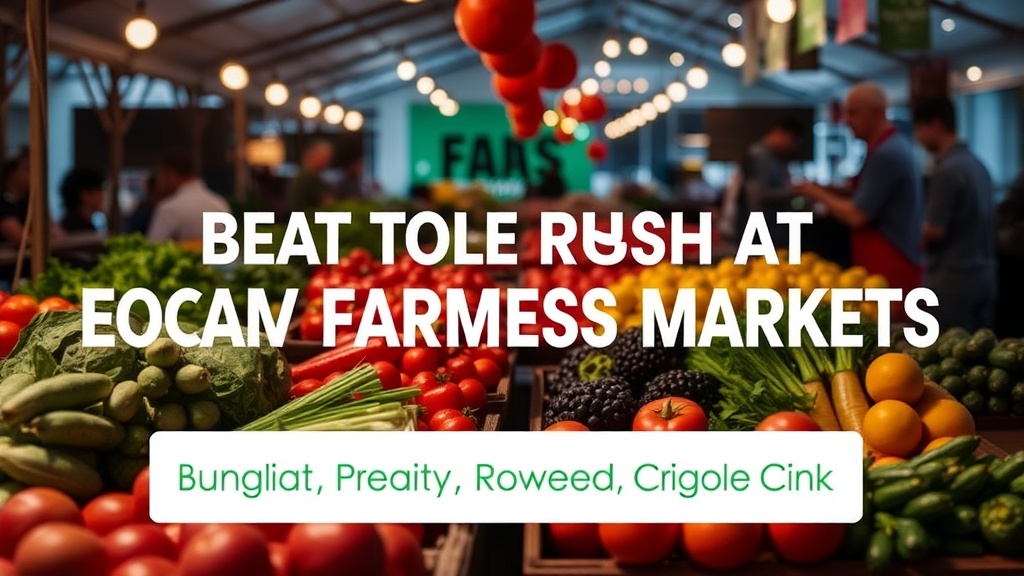
Beat the Rush at Local Farmers Markets

Quick Tip
Arrive within the first hour of opening to ensure you get the best selection of limited-stock artisanal items.
The smell of fresh sourdough and sun-ripened strawberries fills the air as the morning sun hits the stalls. If you want to grab the best seasonal produce without the crowds, you need a strategy. This post covers how to time your visits and what to bring so you aren't stuck waiting in long lines or missing out on the good stuff.
When is the best time to visit the market?
The best time to visit is usually the first hour of operation right when the stalls open. Most vendors bring their freshest, most aesthetic displays at the start of the day. If you show up an hour before closing, you might find great deals, but the selection will be thin. I've seen people walk away with nothing but empty crates because they arrived too late.
If you prefer a quieter atmosphere, aim for the mid-morning lull. It's a bit of a gamble (depending on the weather), but you'll often find more breathing room between the families and the early birds.
To help you plan your trip, I've put together a quick checklist of what to bring:
- Reusable Canvas Totes: Skip the single-use plastic; heavy items like potatoes or melons need strength.
- Cash: While many vendors take Canadian currency via digital transfers or card, small bills are still king for smaller stalls.
- Insulated Bags: Keep your dairy and meat cold while you finish your loop.
- A List: Don't rely on memory—you'll forget the garlic or the specific honey you wanted.
How much should I bring for a grocery run?
Budgeting for a farmers market requires a bit more flexibility than a standard supermarket run. Prices can fluctuate based on the season and local yields. For a standard weekly shop of produce, bread, and eggs, expect to spend between $40 and $70.
It's worth noting that high-quality, locally grown goods often carry a premium price. You aren't just paying for the food; you're paying for the person who grew it. If you're looking for specific nutritional data on your haul, the Government of Canada provides excellent resources on food standards and nutrition.
If you're looking for a place to sit and enjoy your purchases afterward, check out my previous post on finding the best local coffee shops for a quick caffeine fix nearby.
What are the best seasonal items to look for?
Look for whatever is currently in peak season to ensure you get the best flavor and value. In the Prairies, our seasons move fast, so keep your eyes on the calendar.
| Season | Top Picks | Pro Tip |
|---|---|---|
| Early Summer | Strawberries, Radishes | Buy early for berries. |
| Late Summer | Corn, Tomatoes, Peppers | Check for heavy weight. |
| Fall | Squash, Apples, Root Veg | Great for long storage. |
Don't be afraid to ask the growers questions. They usually love talking shop. If you aren't sure how to cook a certain type of squash, just ask—they are the real experts here.